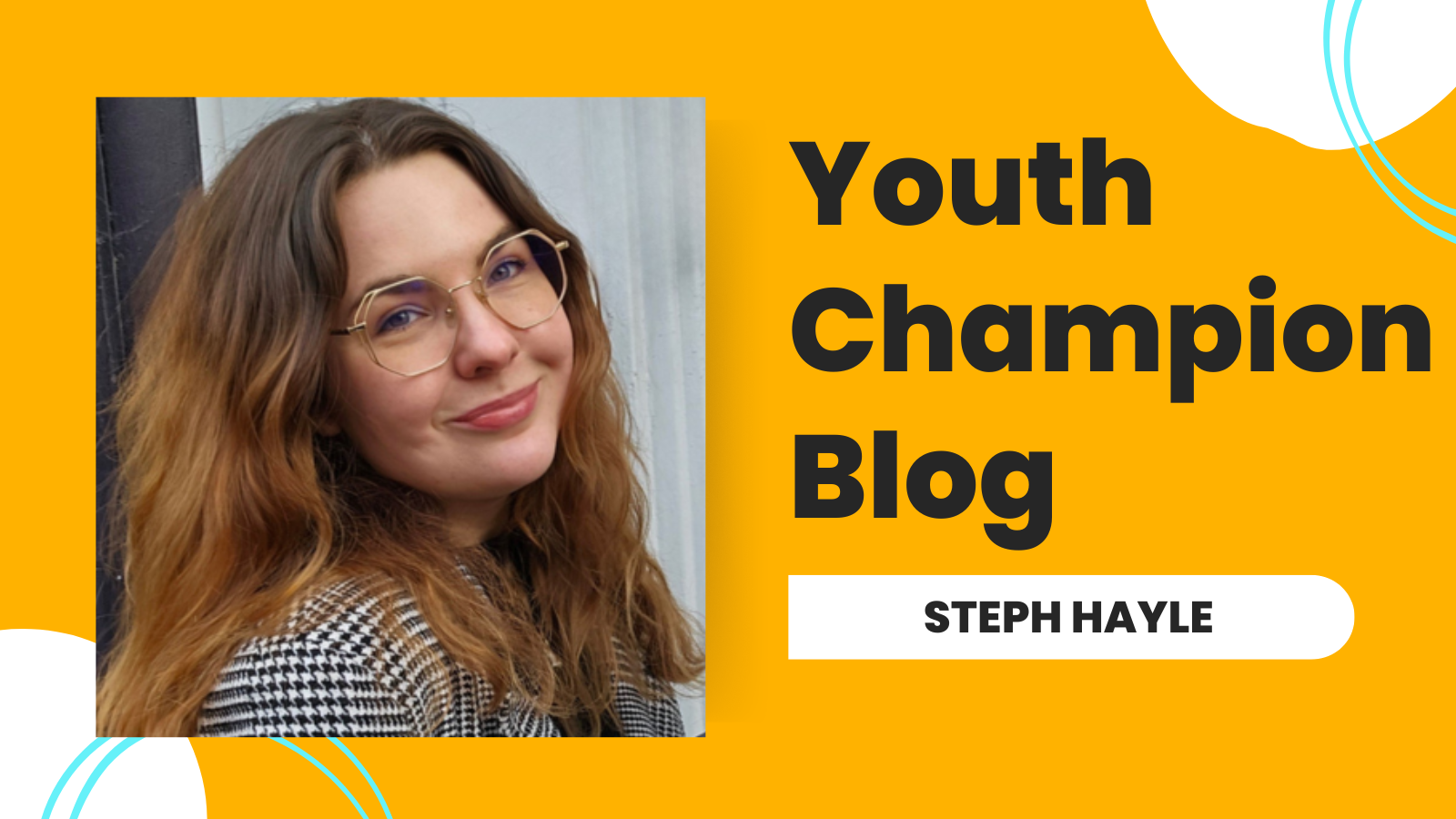
Steph Hayle (she/her) is currently a trustee with The Migraine Trust and Bristol Students’ Union. She began her governance journey at 21 when she was elected as an Officer and Trustee at York Students’ Union. She was later a founding member of the Office for Students 'Disability in Higher Education Advisory Panel', and the Student Minds’ 'Student Advisory Committee'. She holds two public appointments with the Independent Living Fund Scotland and the Teaching Regulation Agency and serves on regulatory panels with the Nursing and Midwifery Council and General Pharmaceutical Council.
Being the youngest person in the room can be tough. Every member of the Trustee Board has been chosen for their own unique experience and expertise, but when the expertise of some members is founded on an executive career which is longer than years you’ve spent alive, it can be hard not to feel intimidated or like you don’t match up.
Age-based discrimination is also a very real barrier. I have faced it during interviews where panel members seem to question my credentials, doubting my knowledge base or experience. I have faced it in board meetings where my perspectives were undermined or dismissed as naive. But the reality is our deep connection to modern culture, technology, social media, and general societal trends, and adaptability to rapid change are instead essential assets that (particularly risk-averse) boards desperately need to survive, and in finding your niche you can have an incredible impact on the boards you choose to work with.
Starting my journey as an elected Student Union (SU) officer was a blessing. SU’s are used to welcoming first-time, young trustees (highly recommend getting involved with yours if you’re student). But it was still a baptism of fire. I remember the intimidation my peers and I felt when trying to challenge long-serving, highly established board members. We struggled to find our footing, doubting whether our voices carried any weight against decades of traditional executive experience, and balancing the cockiness of coming in with a mandate and a mission against the realities that we often didn’t actually know what to do, and it showed.
Moving from SUs into more traditional boards, where being a young student wasn’t an obvious asset and they weren’t used to younger board members, I found a new dynamic. Charity boards can naturally be risk-averse, with tight budgets, relying on retired or highly experienced professionals who bring brilliant insight and experience but may also hold firmly to traditional, tried-and-tested methods. As a young trustee, you present an opportunity to challenge these practices, to be bolder, and to help boards adapt to a changing world, but this can feel like a threat to the status-quo, (and the budget) and lead to conflict with other members and the patronising “That’s a nice idea, but let’s talk about the real world.”
So much about being a Young Trustee or Board Member is finding your niche, something that makes you and your experience a real asset to an organisation. Your age is a brilliant starting point, but your true leverage comes from your wider lived experiences. For me, combining my youth with my lived experience as a disabled woman turned a health barrier into my greatest governance asset, making up for a lack of traditional corporate background. My deep understanding of accessibility barriers allowed me to advocate for inclusive design in ways others without that lived experience may not always see. So, I looked for organisations specifically in need of this perspective, and more diverse ages and applied there, matching my searches to what I could offer, and it worked. I secured board advisor roles, committee roles, and even trustee roles, where I had a guaranteed knowledge base to prove my worth to the board and my colleagues. Doing this, I was able to channel that early boardroom anxiety into a dedicated portfolio career, learning how to use my lived experience to make a real difference.
Join the MovementOne of the most intimidating parts of being a Trustee was learning how to disagree respectfully. Not just learning to navigate differing opinions but to steer difficult conversations is a real skill, and it needs to be practiced, especially when you’re facing the additional hurdle of being the youngest or most professionally inexperienced person there.
I have personally found the most useful way to approach respectful disagreement is uncoupling the person from the position. When a proposal misses the mark, or you feel a colleague has misunderstood something, it can be easy to dismiss them as out of touch or too risk averse. However, in doing that you fall into the same trap your colleagues have in dismissing you as “too young".
Instead, remember that you’re all in this together, as a united front for the betterment of the organisation, even if you disagree in the board room. Try instead, to frame your dissent around evidence and risk, and tie it back to your lived experience and knowledge, which was why you, specifically, were appointed.
One critique young trustees get is that we know how to complain, but we don’t offer tangible solutions. Instead, make sure you don't just offer an opinion - offer data. Your push for change works when you can link it to things that really have an impact, like target demographics and engagement data.
If you validate your colleagues before introducing your counter points, it helps remove that perceived confrontational nature. As previously said, sometimes more established boards can view differing opinions as a threat. I’ve found this technique helps colleagues view you as a critical friend, rather than an unconstructive disruptor.
When you are new to governance, the fear of asking a "silly" question can easily keep you quiet. My personal way to manage this was to tie everything back to our long-term strategic goals. Doing this did two things: first, it proved to the room that I was focused on our highest priorities, protecting my contributions from being dismissed. Second, it gave me a brilliant way to cover my own knowledge gaps. Instead of admitting I was lost, I’d ask, "How does this proposal connect to our broader strategy?" It was an absolute lifesaver on days when I felt out of my depth. Best of all, it guided the board to gaps in their own thinking without making them feel like I was calling them out.
The boardroom is not the place to get bogged down in arguments; doing so risks derailing the entire meeting. If you are stuck in a loop of disagreement, suggest tabling the issue. I’ve found that a quick email followed by a 20-minute Zoom can completely defuse tension, giving both sides the space to clear up misunderstandings. If a direct one-on-one approach feels too daunting, talk to your Chair. It’s their job to make sure the board runs effectively and they can offer advice to help you find a collaborative path forward.
When I first started, I was the only female member of the Board, surrounded by men who spoke a lot and spoke confidently. Learning from this, coupled with my lack of confidence, made me think that if I wasn't speaking constantly, I wasn't adding value. This was, obviously, completely wrong.
Active listening is a strategic move.
When you first join a board, listen to understand the culture, motivations, and the power dynamics of your fellow trustees. Who is risk-averse? Who is open to change? Is anyone particularly influential to the group? Listening carefully helps you map these dynamics and foster relationships with the right people to get your points heard.
Also, what you say in a meeting is more about quality, not quantity. Time as a Trustee is limited, and usually unremunerated, so you don’t need to comment on every paper. Instead wait for the times where your unique perspectives and skills can directly contribute to an issue the board is facing. This allows you to speak with confidence and build trust and influence.
“Never let a fear of sounding silly or inexperienced stop you from speaking up or asking questions.”
However, the famous slogan, “See it, Say it, Sorted” really comes to play here too. If you see something that doesn’t look right, say something! That’s why you’re there. Never let a fear of sounding silly or inexperienced stop you from speaking up or asking questions. Your colleagues want to help you, because helping you helps the board and the organisation. If you have doubts about something the organisation is doing, question it. If you think the board needs more information before making a decision, tell them.
If you don’t understand something, talk to someone. Don’t be afraid to message people outside the Board meetings to ask for some advice. I couldn’t even begin to count the number of coffees and calls I’ve had with colleagues and staff when I’ve not understood something, or want some more information, and it has worked wonders in building relationships, trust, and my own ability to contribute in meetings.
At the end of the day, you were appointed for a reason. Don’t let any internalised doubts or external scepticism shrink your strengths. When boards doubt your knowledge or try to undermine your voice, remember that they are operating with a blind spot that only you can fill. Disagree with confidence, listen with intent, speak with purpose, and never forget that you earned your seat at the table.
Connect with Steph Follow on LinkedIn