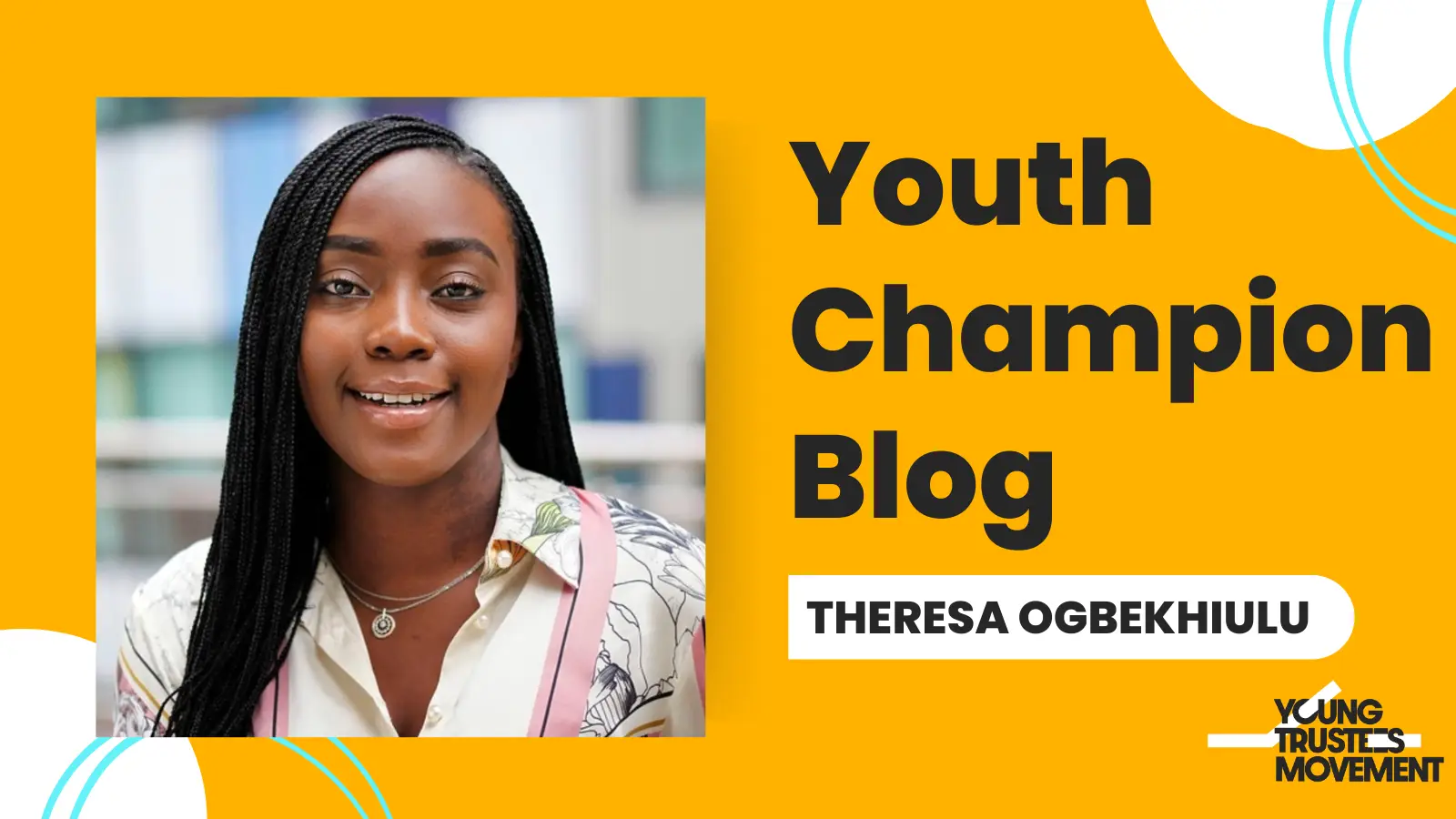
Theresa Ogbekhiulu (she/her) is a researcher and higher education and public-sector professional based in Wales. She is a Non-Executive Director at Swim Wales, a School Governor at Morriston Comprehensive School and Cefn Hengoed Community School, and an Associate Board Member at Swansea Bay University Health Board. Her governance journey began at the age of 20 when she was elected Education Officer at Swansea University Students' Union, representing more than 20,000 students and gaining her first experience of trusteeship and board decision-making. She has since developed governance experience across education, health and sport, with a particular interest in youth participation, representation and inclusive leadership. She is currently an ESRC-funded PhD researcher in Sociology at Swansea University, researching decoloniality, curriculum, student voice and structural inequalities in higher education, and is the Founder and Director of Edutee Global, supporting young people to develop skills and confidence.
When I became a trustee at 20 in 2019, I did not walk into the boardroom thinking I had all the answers. I was an elected Education Officer at Swansea University Students’ Union, representing more than 20,000 students, and suddenly I was sitting alongside people who were older and some had years of experience in governance, finance, strategy and organisational leadership.
I remember being conscious of my age. I was also aware that I was the only person who looked like me, a young Black woman, in the room, but I had been elected to represent students, and that perspective was precisely why I had a place at the table. That experience shaped how I have approached governance ever since.
For anyone who has never been in a board meeting, it can be difficult to know what to expect. There are papers to read, financial information to understand, performance reports to consider, risks to scrutinise and decisions to make. There can also be strong personalities, disagreement and difficult conversations. The best board meetings I have experienced are with people come prepared, listen to one another, understand their responsibilities and are willing to ask constructive questions. Good boardrooms are enabled by chairs who enable healthy debates and one where members are able to present their perspectives respectfully and thoughtfully.
I realised quite quickly that I did not need to know everything. Sometimes one of the most useful questions you can ask is simply, “I don’t understand this. Can you explain it?” There is a good chance someone else in the room was thinking the same thing. I spent a lot of time learning from more experienced colleagues, being mentored and coached by the then Pro-vice Chancellor for Education, Prof Martin Stringer, helped me develop my confidence and understanding of governance significantly. I also sought out leadership development opportunities, such as Equal Power, Equal Voice in Wales, which helped me become more aware of opportunities and networks within the sectors I was interested in. Asking questions, seeking clarification and learning from others are not signs that you do not belong in the boardroom. They are part of becoming a good trustee.
One of the biggest lessons I have learned is that trustees bring different skills and experiences to a board. My contributions on the boards I have served on have often been shaped by my experience across education, working with young people, inclusion and participation. Other trustees may bring expertise in finance, legal, safeguarding, technology, or fundraising. A strong board needs that range of experience because organisations themselves are multi-dimensional. However, being a young trustee does not mean you have to speak only about young people. At the same time, your age and experiences can close a generational gap and provide a perspective that might otherwise be missing.
I have seen the value of this through my current role as a Non-Executive Director at Swim Wales, where I have supported the development of a Youth Board. The important question for me has been how we move from simply asking young people for their views and create genuine routes for them to influence governance and strategic decisions. Representation should not be tokenistic, and it is not enough to have someone in the room because they represent a particular age group, community or lived experience. People need the opportunity to influence the decisions they are being asked to contribute to.
If I could give my 20-year-old self a piece of advice, it would be to read the papers, understand your responsibilities and come prepared, but do not talk yourself out of contributing because you think everyone else knows more than you. You are in that room for a reason, and it’s incomplete without you.
“You are in that room for a reason, and it’s incomplete without you.”
Preparation goes beyond just reading the board papers, it also involves understanding the organisation, its people, its communities and the environment in which it operates. It means asking questions of people who know more than you, taking notes and learning from what happens between meetings as well as during them. You do not have to speak the most to make a valuable contribution. Sometimes your most important contribution will be a question that makes everyone else stop and think. I have also learned that being prepared gives you the confidence to recognise when something does not make sense. You are more likely to ask the question if you have taken the time to understand the issue first.
My first experience of trusteeship came because I put myself forward for a leadership role as a young person. Since then, I have seen how much boards can gain when they make space for people who have traditionally been absent from them. Young trustees should not have to become less of themselves to belong in a boardroom, but organisations also have a responsibility to create an environment where young people can contribute their perspectives, and ask questions without feeling dismissed, and develop their governance experience over time. Recruiting a young trustee is only the beginning, supporting them to achieve their potential is where the true dividend lies.
If we want the next generation to see governance as something they can participate in, they need to be able to see people like themselves in those spaces. They also need to know how to get there, and what actually happens once they get there.
My journey into governance started at 20. I am still learning, but that first experience taught me some vital lessons which I have carried into every boardroom since. You do not need to have all the answers to make a valuable contribution. You need to be prepared to ask the right questions, listen to others, don't stop learning, bring your perspective and take your responsibilities seriously. That is what being a good trustee is about.