
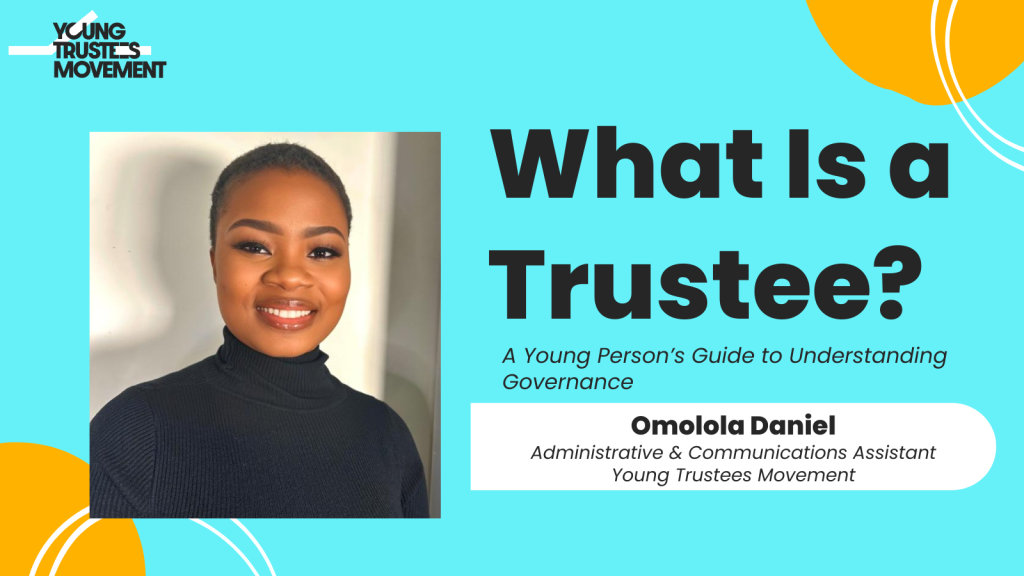
What Is A Trustee – A Youth Champion Blog by Omolola Daniel
In this blog, Omolola goes back to basics to unpack one of the most common questions young people ask about governance: what is a trustee? She explores what trustees do, why organisations need them, and how young people can begin their journey into governance.
Introduction
At the Young Trustees Movement, we interact with many young people who care deeply about the world around them.
Many of them want to contribute meaningfully to society, whether by shaping policies, influencing decisions, improving services, or helping organisations better serve the people they exist for.
But somewhere along that journey, a common question often comes up:
“How do I actually get into governance spaces?”
Or even more simply:
“What is a trustee?”
It may sound like a basic question, but it is one many young people are quietly asking. At one of our recent Champions Training sessions, someone asked exactly that.
That question inspired this blog.
We wanted to go back to basics and answer some of the questions many young people may be thinking but are often too afraid or shy to ask.
So, if you’ve ever wondered:
- What is a trustee?
- What do trustees actually do?
- Why do organisations need them?
- And how can I become one?
- How old do you need to be to become a trustee?
This blog is for you.
Q: What is a trustee?
A trustee is someone who helps oversee how a charity or non-profit organisation is run. They sit on a board and are responsible for making sure the organisation is:
- Working towards its purpose
- Using its money responsibly
- Operating legally and ethically
- Making decisions that serve its beneficiaries well
In simple terms, trustees help steer the organisation in the right direction. Think of trustees as the people responsible for the big-picture decisions.
They may not be the ones delivering services every day, but they help shape: Where the organisation is going, What priorities it focuses on, How success is measured and How risks are managed.
In the UK, charity trustees have legal responsibilities set out by the relevant charity regulator in each nation. The Charity Commission defines a trustee as someone with “general control and management of the administration of a charity,” which means trustees are not just advisors, they are part of the organisation’s governing body.
Q: What does a trustee actually do?
Many people assume trustees are involved in the day-to-day running of a charity. Usually, they are not.This is one of the biggest misconceptions about trusteeship.
Do trustees run the organisation day-to-day?
Most of the time, no.
Day-to-day operations are usually handled by staff, programme managers, senior leadership team and CEOs or executive directors
Trustees provide strategic oversight, not daily management.
That means they focus on questions like:
- Are we delivering on our mission?
- Are we financially sustainable?
- Are we making good long-term decisions?
- Are we managing risks properly?
- Are we serving the people we say we exist to serve?
A good way to think about it is this:
Staff work “in” the organisation. Trustees work “on” the organisation.
What responsibilities does a trustee have?
Although responsibilities vary slightly depending on the organisation, trustees typically help with:
- Strategy
Helping shape long-term goals and priorities.
- Financial oversight
Making sure money is being managed responsibly and sustainably.
- Accountability
Ensuring the organisation is operating legally and ethically.
- Risk management
Identifying and responding to potential risks.
- Leadership support
Supporting and constructively challenging senior leaders when necessary.
Being a trustee means asking good questions, thinking critically, and helping make long-term decisions of benefit to the organisation.
Sometimes that means agreeing.
Sometimes that means challenging the status quo
And both matter.
Q: Why do organisations need trustees?
Organisations need trustees because they need accountability. Without governance, even organisations with great intentions can struggle.
Trustees help ensure that organisations remain focused, sustainable, responsible and effective
They help protect the organisation’s mission and also bring outside perspectives. A strong board usually includes people with different:
- Professional skills
- Lived experiences
- Perspectives
- Networks
- Ways of thinking
That diversity matters because better decisions are often made when more voices are in the room.
This is one reason The Young Trustees Movement exists.
Too often, young people are excluded from governance spaces because of assumptions like:
- “You’re too young.”
- “You need more experience.”
- “Come back in 10 years.”
But age does not automatically equal wisdom and years of experience do not always equal better perspective.
Q: What can young trustees bring?
A lot more than people often assume. Young trustees can bring:
- Lived experience
- Fresh perspectives
- Community insight
- Creativity
- Digital fluency
- Innovation
- Challenge to outdated thinking
Many boards say they want diversity, but meaningful diversity includes age diversity too.
Young trustees often help organisations better understand the communities they serve, especially where those communities include young people.
Q: How do you become a young trustee?
Here’s the good news, there is no single route.
You do not need to: Be wealthy, know powerful people, have decades of experience or already be a CEO. Many people start by building confidence and understanding governance first.
You can begin by:
- Learning about trusteeship
Attend events, training, and workshops.
- Building relevant experience
Volunteering, committee work, school governance, community leadership, and project coordination can all help.
- Understanding your transferable skills
You may already have useful skills from:
- Communications
- Finance
- Operations
- HR
- Legal work
- Lived experience
- Advocacy
- Applying for trustee opportunities
Start looking for boards whose mission genuinely matters to you, not every board is looking for a finance expert or lawyer.
Many organisations value passion, commitment, and perspective just as much.
Q : How old do you need to be to become a trustee?
In most cases in the UK, you must be at least 16 years old to become a charity trustee.
However, the exact age requirement can sometimes depend on the organisation’s legal structure or governing document, so it is always worth checking the specific eligibility criteria for each opportunity.
At the Young Trustees Movement, when we talk about young trustees, we generally refer to people aged 18–30, although governance opportunities can exist both below and above that range.
The important thing to remember is this: age alone should not determine whether your voice belongs in governance spaces. If you have lived experience, insight, passion, and a willingness to learn, you may already have more to offer than you realise.
Final Thoughts
If you’ve ever thought:
“I’m interested… but I don’t know enough.”
“I care… but I’m too inexperienced.”
“I’d love to contribute… but I’m not sure I belong.”
You’re not alone, and that’s exactly why the Young Trustees Movement exists.
We believe governance should be more inclusive, more representative, and more accessible. You do not need to have all the answers before stepping into governance. Sometimes, asking thoughtful questions is exactly what makes a great trustee.
So maybe the question is no longer:
“Who is a trustee?”
Maybe the better question is:
“Could I become one?”
And our answer?
Absolutely.
If you’re curious about trusteeship and want to keep learning, there are plenty of ways to get started with the Young Trustees Movement.
Our Community Café offers an informal and welcoming space for young people aged 30 and under to hear directly from young trustees about their governance journeys, challenges, and lessons learned. It is a great opportunity to ask questions, gain insights, and connect with peers through open discussions and breakout sessions.
Our Champions Training brings together young people, organisations, board members, and leaders to explore what meaningful board diversity and inclusive governance can look like in practice. These sessions help organisations think more intentionally about creating accessible governance spaces, while also helping aspiring young trustees better understand what boards are looking for.
You can also explore resources, blogs, and trustee opportunities on our website, or join our Digital Hub to connect with a growing community of young people interested in governance and leadership.
If you have questions about trusteeship or governance that were not covered in this blog, or simply want to explore something more specific, feel free to get in touch with us at [email protected].
We’d be happy to hear from you and support however we can.
Wherever you’re starting from, you do not have to figure it all out alone, that is why we are here.